
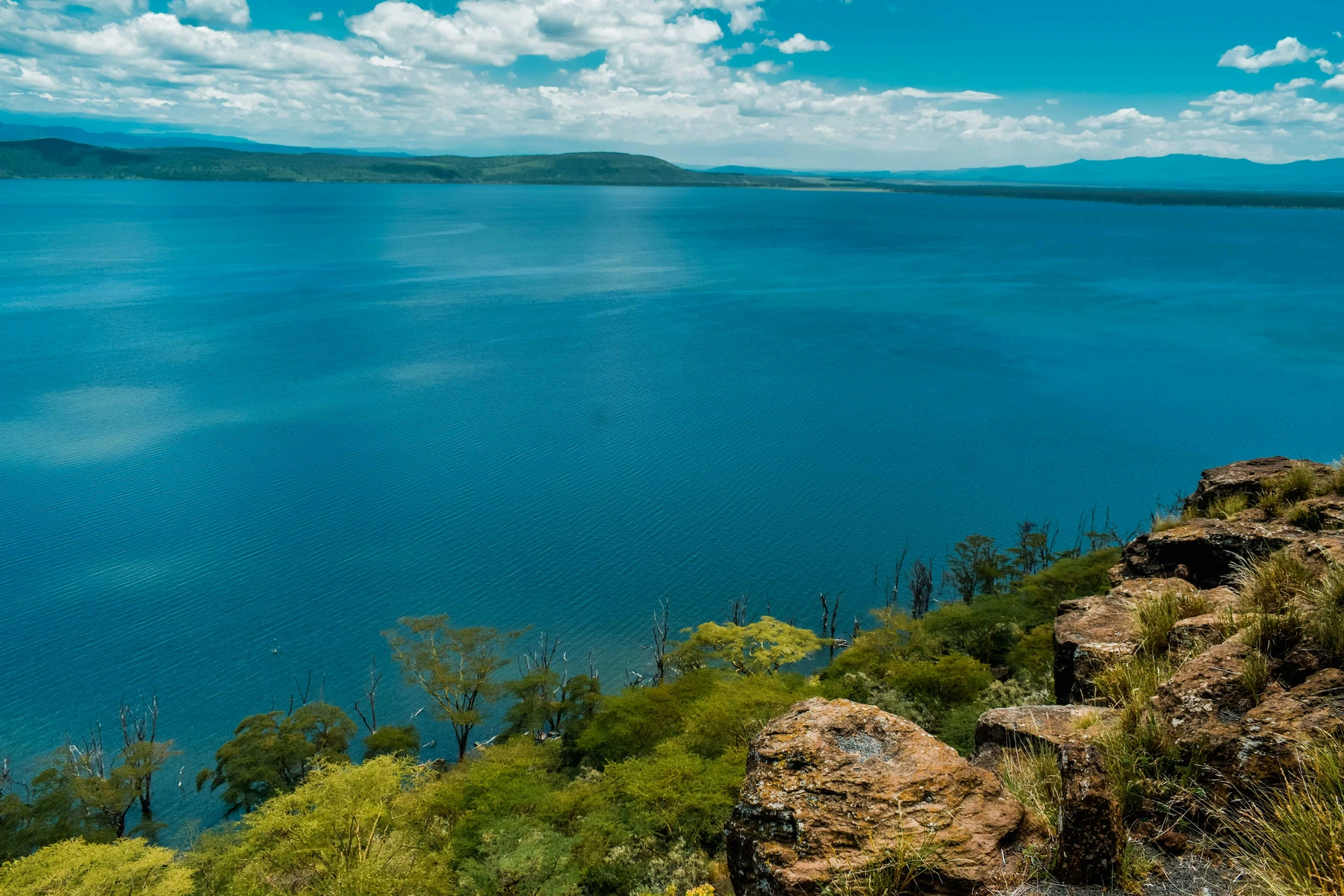
Lake Nakuru is most useful when you want a compact park with a strong conservation story, Rift Valley scenery and a realistic chance to spend a full wildlife day without committing to the distances of a larger safari destination. It can stand on its own as a focused stop, but it often works best in a carefully paced Nakuru–Naivasha route where the park and the freshwater lake solve different planning problems.
The familiar image of Nakuru is a lake hidden under a permanent sheet of pink flamingos. That image is too fixed for the current ecology. Flamingos move between the soda lakes of the wider Rift Valley system as water levels, chemistry, food and conditions change. Visit for the whole park—rhino, varied habitats, birds, viewpoints and the lake—not for a guaranteed shoreline photograph.
Lake Nakuru at a glance
- Location
- Rift Valley, about 156 km northwest of Nairobi on the A104 corridor
- Scale
- 188 km², with lake, grassland, acacia woodland and escarpment habitats
- Core experience
- A compact game-drive park with major rhino significance, birdlife and changing lake landscapes
- Stay length
- One full park day is a useful minimum; add Naivasha time rather than stretching Nakuru indefinitely
- Access
- KWS lists Lanet, Nderit and Main gates, with Lanet useful for travellers approaching from Nairobi
- Main trade-off
- More concentrated and accessible than a large safari ecosystem, but less route variety and no fixed flamingo spectacle
A compact park with more than a lake view
Lake Nakuru National Park sits around a shallow, semi-alkaline lake, with open country, acacia woodland, rocky escarpments and viewpoints that make the landscape legible in a single day. The scale is part of the appeal. A route can include wildlife drives and scenic stops without asking travellers to spend every hour covering the distances of the Maasai Mara or a much larger wilderness area.
KWS describes the park as an ornithological destination with approximately 450 bird species and highlights scenic viewpoints, picnic sites and Makalia Waterfalls. The lake is also part of the Kenya Lake System in the Great Rift Valley, a UNESCO World Heritage property that links Nakuru's ecology to a larger network rather than treating it as an isolated postcard.
The park is fenced and close to Nakuru city, so it feels more contained than a vast open ecosystem. That can suit a first safari, a family route or travellers who want a strong wildlife day on a limited schedule. It can feel too small for a long stay built only around repeated game drives, especially if the wider route already includes another major savannah destination.
Experience
What earns Lake Nakuru a place in a Kenya route
-
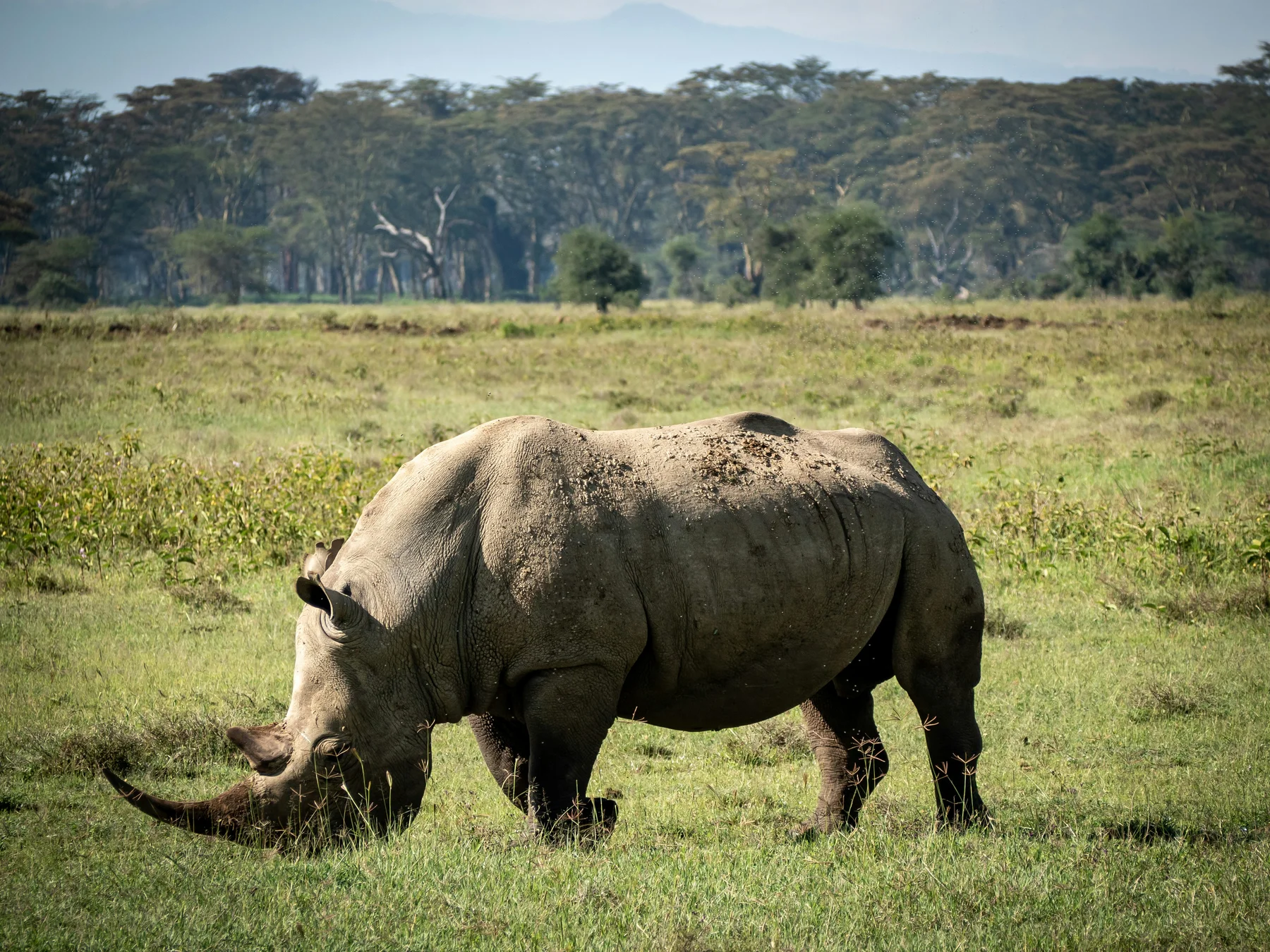
A serious rhino sanctuary
KWS identifies Lake Nakuru as Kenya's first government-managed rhino sanctuary, designated in 1987, supporting both black and white rhinos. Sightings remain wild; the conservation significance does not depend on a guaranteed encounter.
-
A readable Rift Valley landscape
Lake, escarpment, woodland and open areas give a one-day drive a clear sense of place. Light and water level can change the view without changing the park's underlying value.
-
Birding beyond the flamingo cliché
The park's birdlife includes far more than one headline species. Bring binoculars and expect seasonal and ecological variation rather than a fixed list.
-
A useful bridge to Naivasha
Nakuru's vehicle-based wildlife day and Naivasha's lake or Hell's Gate activities create contrast. They should be planned as separate experiences, not compressed into one hurried checklist.
Rhinos, giraffes and a realistic wildlife day
The strongest wildlife reason to include Nakuru is its protected rhino population. KWS describes the park as a flagship sanctuary for endangered black and white rhinos and also highlights Rothschild's giraffe and diverse wildlife. Lions, leopards, buffalo, waterbirds and other species may add to the day, but the guide should never turn a park description into a sighting guarantee.
The park's compact scale makes a full day feel purposeful when the route is paced around habitat and light. Start with the conditions on the day, allow time for the guide to read the park and keep the schedule open enough for a worthwhile sighting rather than racing between every viewpoint. A shorter visit can work as part of a transfer, but it is more vulnerable to Nairobi traffic, gate formalities and weather.
Flamingos are a possibility, not a permanent backdrop
Flamingos belong in the Lake Nakuru story, but the old claim of a predictable mass gathering has been removed. The Kenya Wildlife Service's current flamingo update explains why a single-lake count can mislead and why birds move across the wider lake network. Water level, salinity, food availability and conditions can change where the birds concentrate.
That means the sensible promise is not “a pink lake.” It is a chance to observe flamingos and other waterbirds within an important Rift Valley lake system, alongside a park whose rhinos and landscapes justify the visit even when the birds are scattered. If flamingos are the only reason for the detour, check current local conditions close to travel and keep a second reason for the park in the plan.
Nakuru on its own, or with Naivasha?
Lake Nakuru can work as a one-night or two-night stop when the route gives it a complete park day. For a Nairobi approach, KWS specifically advises travellers to use Lanet Gate to avoid traffic in Nakuru CBD; the exact gate and lodge should still be matched to the road plan.
Naivasha is a different experience. The freshwater lake, boat operators and Hell's Gate activities can change the pace from vehicle-based wildlife viewing to boating, walking or cycling where current conditions and permissions allow. The Lake Nakuru & Naivasha itinerary shows why two and three days should not be treated as the same route with an extra night: the third day should have one clear purpose.
Use the Kenya hub and Kenya itineraries to compare the Rift Valley route with the Maasai Mara, Amboseli and Nairobi. Nakuru is a strong middle-scale choice; it is not a replacement for a much larger ecosystem when the trip is primarily about several days of broad safari coverage.
What question is Lake Nakuru answering?
Conservation and scale
Lake Nakuru
Choose it for a focused park day, rhinos, birds, viewpoints and a manageable Rift Valley landscape. One full day is usually more useful than a rushed half-day added between transfers.
Contrast and activity
Nakuru with Naivasha
Choose the combination when you want the park followed by lake time, Hell's Gate or a slower change of pace. Allow the two places their own travel and activity windows.
Bigger safari system
Maasai Mara or Amboseli
Choose a larger destination when broad habitat, several game-drive days or an ecosystem-led safari matters more than compact access and rhino conservation.
Who should include Lake Nakuru?
Include it if…
- You want a compact wildlife park with an important rhino story and strong Rift Valley scenery.
- You can protect a full park day rather than treating Nakuru as a roadside photo stop.
- Birdlife, landscape and varied habitats matter alongside large mammals.
- You want to pair a vehicle-based park with a different Naivasha or Hell's Gate experience.
- You can enjoy the lake system without needing flamingos to fill the frame.
Consider another emphasis if…
- Your entire decision depends on seeing a mass flamingo concentration at the exact time of travel.
- You have only a narrow transfer window and no buffer for traffic, entry or weather.
- You want the scale and repeated game-drive variety of the Maasai Mara or another larger ecosystem.
- You would add Nakuru only to repeat the same vehicle-based safari already covered elsewhere.
- You want to compress Nakuru, a boat trip and Hell's Gate into one nominal day.