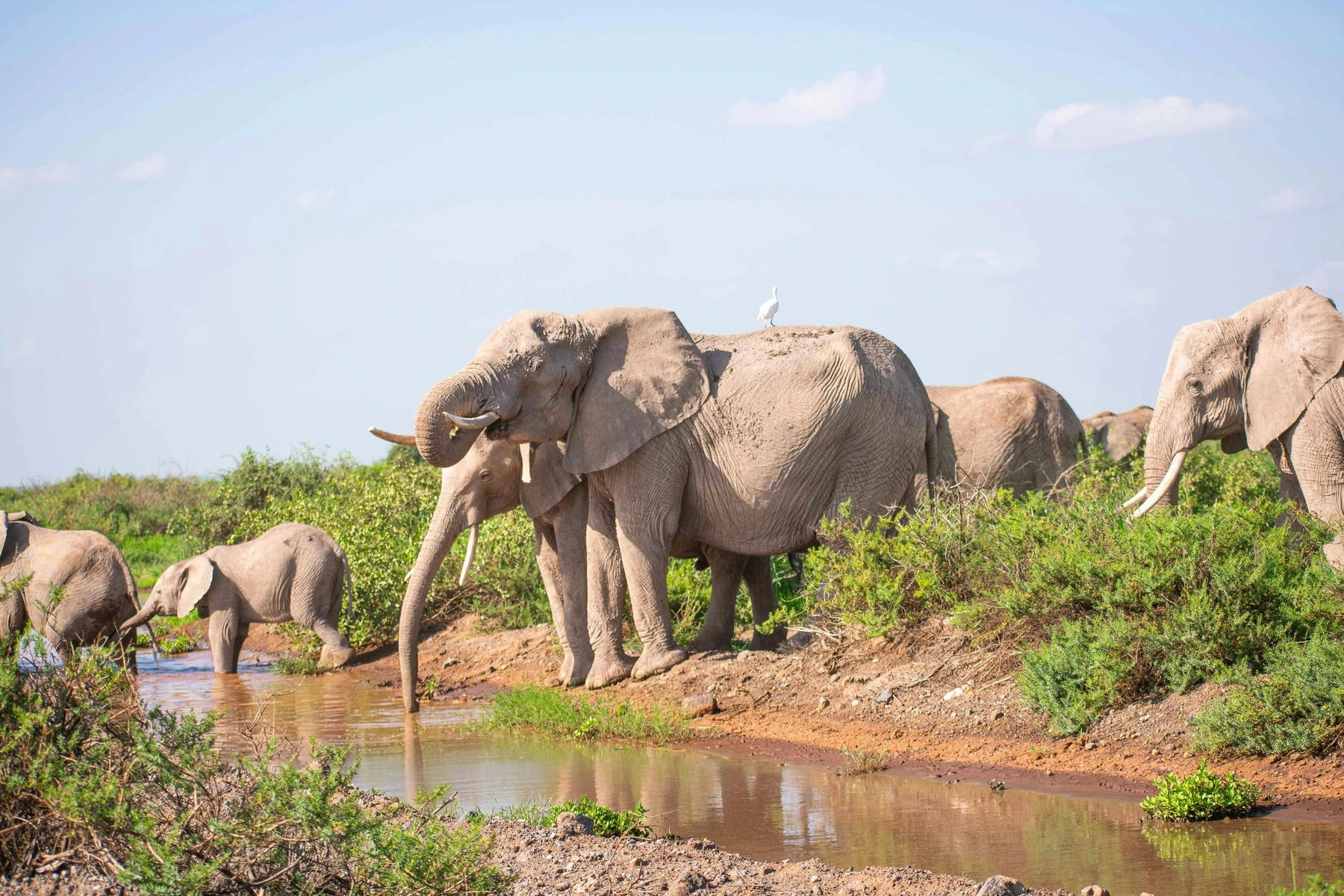
Compare two-, three- and four-day Amboseli safari itineraries from Nairobi, including what each pace fits, what gets compressed and which version Kora recommends.
Amboseli can work as a fast extension from Nairobi, a balanced two-night safari or a slower stay with more room for photography and downtime. The useful question is not whether one duration is universally correct. It is how much of the first and last day the road will consume, how many wildlife windows remain, and whether another night adds a different rhythm or merely repeats the same circuit.
This guide compares the sensible road-based versions. All assume a Nairobi start and end, although an onward route through southern Kenya can change the final day. A clear Kilimanjaro view, a particular elephant encounter or a fixed journey time is never an itinerary inclusion.
Amboseli itinerary options at a glance
Shortest sensible version
2 days / 1 night, when time is genuinely tight
Preferred duration
3 days / 2 nights for most first visits
Slower option
4 days / 3 nights for photography, birding, families or lodge time
Start and end
Nairobi, unless Amboseli is part of a confirmed southern Kenya route
Planning basis
Private road transport, with the exact gate chosen around lodge location and current roads
Good for
Elephants, wetlands, open landscapes, birding and patient photography
Main uncertainty
Cloud or haze may hide Kilimanjaro throughout the stay
Choose the pace
How many days make sense in Amboseli?
workable
2 days / 1 night
2 days
Best for
A short Nairobi extension with a hard time limit
What fits
One arrival drive and one early wildlife window when transfers run well
What you sacrifice
A full middle day, recovery margin and a second morning
Transfer burden
High; road time shapes both days
Two days can work, but it is exposed to traffic, a late arrival and a cloudy morning. Treat it as a focused taste of Amboseli, not a compressed promise to see everything.
recommended
3 days / 2 nights
3 days
Best for
Most first-time visitors travelling by road from Nairobi
What fits
Arrival afternoon, a complete middle day and a conditional departure drive
What you sacrifice
Little, provided the lodge supports efficient access
Transfer burden
Moderate; the middle day is protected from intercity travel
Two park nights create more than one morning chance and allow a midday pause. This is usually the best balance between useful safari time, road effort and repetition.
slower
4 days / 3 nights
4 days
Best for
Photographers, birders, families and travellers who value lodge time
What fits
Several shorter drives, rest, weather flexibility and time beyond a checklist
What you sacrifice
Another day that might add more value elsewhere on a wider Kenya trip
Transfer burden
Lower as a share of the trip, though the Nairobi transfers remain
Four days is not automatically better. It earns its place when the extra time supports patient observation, a different activity or genuine rest—not another identical loop around the park.
Sample Amboseli itinerary options
The sequences below share the same practical assumptions: confirm the Nairobi pickup, current road and gate, lodge location, park-entry basis and actual drive windows before travel. Those details do not need repeating inside every version.
Sample routes
Two-, three- and four-day Amboseli routes
2 days
2-Day Amboseli Itinerary
A fast extension that protects one afternoon and one morning
1
Day 1
Nairobi to Amboseli
Transfer early and use the afternoon honestly
Leave Nairobi early by the route that suits current conditions and the lodge's gate. After entry and check-in, use the remaining light for a focused drive near the lodge rather than crossing the park to chase a report.
2
Day 2
Morning drive and return to Nairobi
Choose one final priority before the road takes over
Start early for the cooler wildlife window, then leave with enough margin for the Nairobi journey. Do not promise a long morning drive, a leisurely breakfast and an early city arrival in the same plan.
3 days
3-Day Amboseli Itinerary
The balanced version for most first visits
1
Day 1
Nairobi to Amboseli
Arrive for an afternoon introduction when timing allows
Travel from Nairobi, settle in and use the afternoon for wetlands and open plains close to the lodge. Sunset and mountain visibility remain weather outcomes, not scheduled events.
2
Day 2
Morning and afternoon in the park
Let light, heat and wildlife create two different sessions
Begin around the cooler morning window. Pause through the middle of the day when lodge geography makes that efficient, then return as the heat eases. A single longer drive can suit photographers when conditions are unusually productive.
3
Day 3
Final drive and onward journey
Protect the transfer instead of overloading the morning
Choose a focused early drive or a slower breakfast, then return to Nairobi or continue on a confirmed southern Kenya route. Build traffic and road-condition margin around any later flight.
4 days
4-Day Amboseli Itinerary
A slower stay when the extra day has a clear purpose
1
Day 1
Nairobi to Amboseli
Transfer without forcing a full safari day
Reach the lodge and take a short orientation drive if arrival time and gate rules allow. Save the wider park plan for the complete days ahead.
2
Day 2
Explore the wetlands and plains
Use two wildlife windows with a real midday pause
Plan the day around current wildlife movement rather than a fixed sightings list. Give elephants space and notice the relationship between marsh, grassland and drier habitat.
3
Day 3
Slow the rhythm
Make the extra day different
Use a later start, a patient photography session, birding, family downtime or a responsibly arranged activity in the wider ecosystem. If none of those matters, the third night may be better used elsewhere.
4
Day 4
One final window, then onward
Leave time for the road or the next southern Kenya stop
Take a final drive only when it fits the onward plan. Continue towards Nairobi or a pre-checked Tsavo connection rather than treating the last day as unlimited safari time.
What does an Amboseli itinerary cost?
Current park charges can be checked, but a useful two-, three- or four-day total also needs dated lodge rates, residency, room occupancy, vehicle capacity, pickup point and the precise entry pattern. A generic “per day” figure hides those assumptions.
Cost breakdown
Price the same route on explicit assumptions
Pricing checkedSeptember 2026
Quote basis
Currency
USD for non-resident planning; KES where citizen or resident charges apply
Pricing basis
Per person sharing, two travellers, private road transport from and back to Nairobi
Travellers
Two adults; reprice for children, residents or a different group size
What the quote must state
Transport
Private safari vehicle; shared departures are a separate comparison
Room basis
One twin or double room; named property and room category required
Park fees & permits
Include the current dated KWS entry and vehicle basis for the planned access pattern
Meals
State the lodge meal plan and transfer-day meals explicitly
Activities
Include only agreed game drives and any separately arranged experience
Exclusions
Flights, visas, insurance, gratuities and unlisted personal spending
How to read the total
01
Budget
Compare simple accommodation outside the park and shared transport only when the departure is real and the pickup terms are clear. A cheaper distant lodge can add daily transfer time and extra access questions.
02
Mid-range
The most useful comparison is usually a named lodge or camp with a private vehicle and a clear meal plan. Location can matter more than decorative room differences because it controls the game-drive rhythm.
03
Luxury
Higher-end pricing may pay for location, space, service, conservancy access or private guiding. Ask which benefit changes the experience; a premium room alone does not create more time in the field.
How accommodation changes the itinerary
An inside-park property can reduce gate friction and make early or late park time easier, but it may cost more and still be far from the habitat you want that day. An outside-park camp may offer value, views or a broader ecosystem setting, yet the exact gate distance and access pattern must be part of the comparison.
Lodge tier affects more than the room. Meal timing, packed-breakfast flexibility, family space, vehicle arrangements and the ability to rest between drives all shape the day. Ask for the property name, room type, occupancy, meal plan and realistic time to the intended game-drive area before comparing quotations.
Useful Amboseli add-ons
Tsavo West: Kenya Wildlife Service identifies a road link between Amboseli and Tsavo West, making this a real southern Kenya continuation. Confirm the current road, gate and whether the extra park deserves enough nights rather than adding it as a rushed transfer label.
Nairobi: A night in Nairobi can protect an international arrival or departure, and creates room for a separately planned city experience without stealing an Amboseli wildlife window.
A longer southern Kenya route: Amboseli can sit inside a wider road journey when each stop adds a different landscape and the transfer days remain credible. Do not add distant headline parks merely to lengthen the list.
The Amboseli guide explains the park's wetlands, scale and seasonal trade-offs. Compare other routes in Kenya Itineraries before deciding whether the extra day belongs here or elsewhere.
Plan with Kora
Want to compare the Amboseli options on current assumptions?
Share your Nairobi plans, onward destination, dates and preferred pace. Kora can compare two, three and four days using the same transparent transport, room and park-fee basis.