
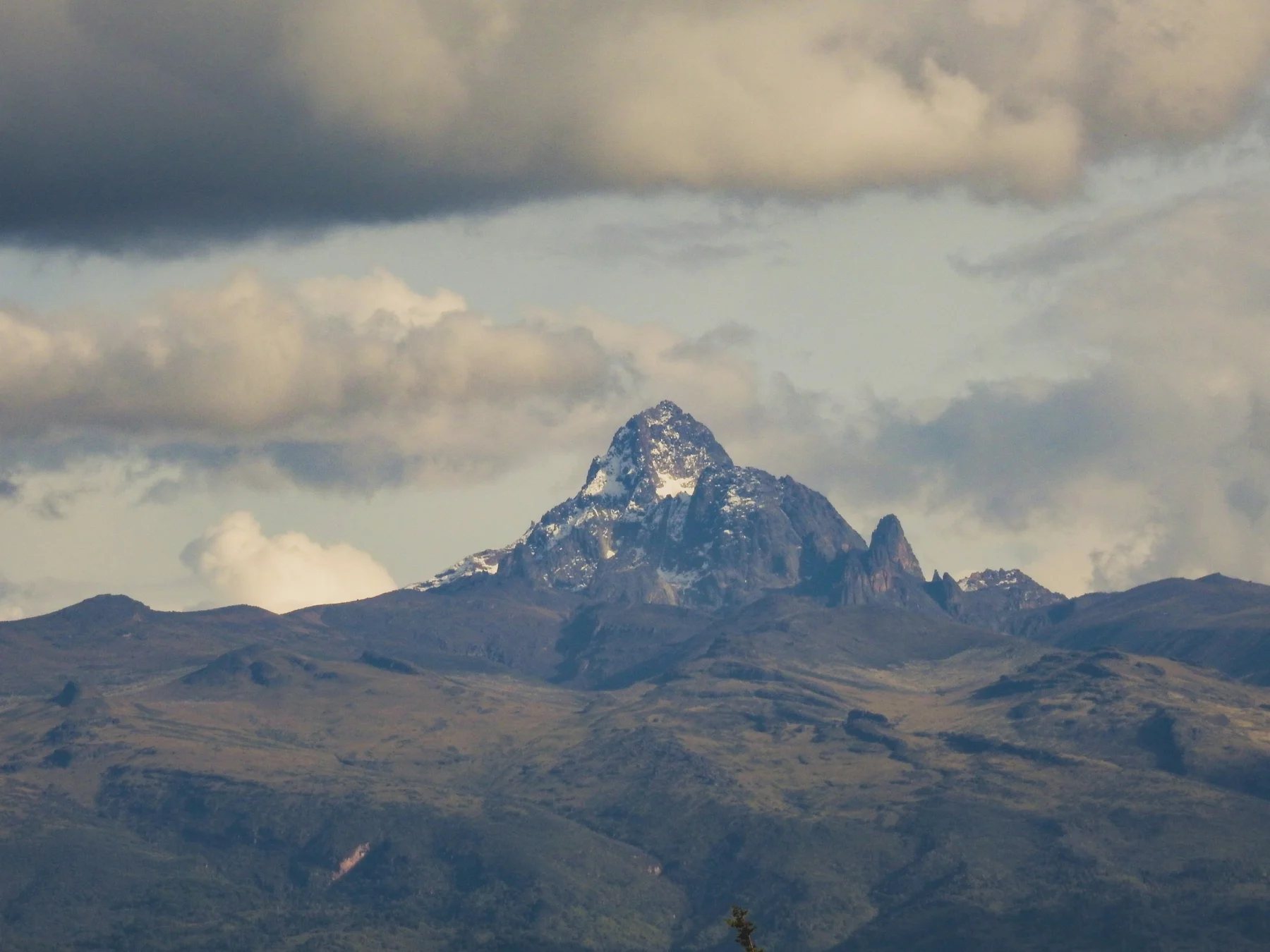
The Naro Moru route is a direct high-altitude approach to Point Lenana, Mount Kenya's trekking summit. Direct is not the same as easy. A four-day schedule climbs quickly from the roadhead to a high sleeping camp, then uses a cold pre-dawn summit attempt and a long descent. Fitness helps with the walking, but it does not prevent altitude illness.
This guide stays fixed at four days because a shorter version would worsen an already rapid ascent, while a responsible longer alternative needs a specifically verified stage plan rather than an extra day inserted for appearance. Travellers who are not recently acclimatised, have a history of altitude illness or want a gentler route should ask a qualified mountain operator to build a slower itinerary, potentially using a different route.
Naro Moru trek at a glance
- Duration
- 4 days / 3 mountain nights
- Objective
- Point Lenana, the non-technical trekking summit; Batian and Nelion are technical climbs
- Highest point
- KWS lists Point Lenana at approximately 4,984m
- Route character
- Direct ascent, montane forest, moorland, the often-wet Vertical Bog and exposed alpine terrain
- Critical issue
- Rapid gain in sleeping altitude, especially from Met Station to Mackinder's area
- Support assumption
- A qualified local mountain team, confirmed park registration, food, shelter and emergency plan
- Weather
- Cold, rain, wind, mud and poor visibility are possible in any season
4-Day Mount Kenya Naro Moru itinerary
The stage names and elevations below are planning references. The team must confirm current hut, campsite, trail and vehicle access before departure, and may change or abandon the summit attempt for weather, health or route conditions.
Mount Kenya via Naro Moru in four days
-
Day 1
Naro Moru area to Met Station
Register, check equipment and begin the forest ascent
Meet the mountain team, verify park formalities, distribute loads and review the turnaround and emergency plan. Drive or walk to the appropriate trail start as current access permits, then ascend through forest towards Met Station, commonly described at about 3,050m. The first night is already high enough for symptoms to matter.
-
Day 2
Met Station to the Mackinder's area
The major sleeping-altitude jump
Continue through moorland and the Vertical Bog towards the Teleki Valley and Mackinder's area, commonly around 4,200–4,300m. Rain can turn this stage muddy and slow. The large sleeping-altitude gain is the itinerary's principal acclimatisation weakness; the guide must assess symptoms continuously and stop ascent when appropriate.
-
Day 3
Point Lenana attempt and descent
A cold night start followed by a long day down
If the guide, weather and every trekker's condition support it, leave during the night for Point Lenana around sunrise. Darkness, cold, wind, ice or snow and fatigue can make the non-technical trail serious. The summit is optional; the safe decision may be to turn around. Descend after the attempt and continue to a lower overnight point agreed by the team rather than assuming a fixed camp regardless of pace.
-
Day 4
Complete the descent and leave the park
Keep enough time for the gate and onward road journey
Finish the descent through moorland and forest, sign out and check that the whole team and equipment are accounted for. Return to the Naro Moru area before any separately planned road transfer. Do not attach an inflexible same-day international flight to the trek finish.
Why acclimatisation changes the decision
The CDC's 2026 high-altitude guidance advises that, once above 3,000m, sleeping altitude should generally increase by no more than about 500m per day, with an extra acclimatisation night for each additional 1,000m gained. It also explains that physical fitness does not protect against altitude illness.
The standard four-day pattern can exceed that conservative sleeping-altitude guidance on day two. That does not mean every trekker will become ill, but it means the schedule deserves explicit medical and operational scrutiny. A headache with nausea, dizziness or unusual fatigue after ascent can be acute mountain sickness. Worsening symptoms, breathing difficulty at rest, confusion or loss of coordination are not “summit nerves.” Do not ascend with worsening symptoms; descent and professional medical help may be necessary.
Mountain team, equipment and weather
The quotation should name the lead guide or company, guide-to-client basis, porters or load limits, cook arrangements, communication method, first-aid and altitude-monitoring equipment, evacuation process and who pays for an evacuation. Verify the operator's current licences, insurance and park registration rather than relying on “experienced guide” as a complete specification.
At minimum, plan for broken-in waterproof boots, waterproof shell and trousers, warm insulating layers, gloves, warm hat, sun protection, headlamp with spare power, personal medication, suitable sleeping bag, water capacity and a protected daypack. The current KWS Mount Kenya brochure specifically lists warm clothing, camping equipment, first aid, sunglasses and appropriate hiking or mountaineering gear. The operator should issue a dated, route-specific equipment list and explain what can be hired, its condition and replacement plan.
There is no weather-guaranteed summit season. Rain makes the Vertical Bog slower, while clear-looking dry periods can still bring freezing summit conditions, wind or poor visibility. A schedule and team that can turn back are more important than a sunrise promise.
What does a supported four-day trek cost?
A reliable total needs a dated quote that states team size and wages, park and rescue charges, hut or camping basis, meals, transfers, group size, equipment hire, insurance and taxes. Those vary too much for a single range to be useful.
As checked in September 2026, the current KWS conservation-fee schedule lists Mount Kenya National Park at USD 70 per non-resident adult per daily entry, with separate citizen, resident, African-citizen and child categories. Confirm how KWS applies current daily, camping, hut and rescue-related charges to the exact four-day plan before accepting a quote.
Cost breakdown
Require a trekking quote to expose the safety assumptions
Pricing checkedSeptember 2026
Quote basis
What the quote must state
How to read the total
Mountain support and staffing
Compare team qualifications, staffing ratios, porter load policy, wages, food and emergency capability before comparing the bottom line. A cheaper quote may simply omit a safety-critical assumption.
Equipment and accommodation
Ask which tents, sleeping systems, group shelter, cooking equipment and hut reservations are included. Inspect or reserve hired boots and sleeping bags before the trek, not at the trailhead.
Contingency and evacuation
Confirm the communication chain, nearest realistic evacuation points, insurance requirements, upfront payment expectations and treatment of an early descent. “Rescue fee included” is not the same as comprehensive evacuation cover.
Who should choose this route?
Consider it if…
- You are comfortable with long, cold and potentially wet trekking days on uneven terrain.
- You understand that Point Lenana is optional and the guide may turn the group around.
- You have recent altitude exposure or have discussed the rapid ascent with an appropriately qualified professional.
- The operator has supplied a credible team, equipment and emergency plan.
Ask for a slower plan if…
- You are arriving directly from low altitude with no acclimatisation time.
- You have previously had significant altitude illness or relevant medical concerns.
- Your main goal is a guaranteed sunrise summit rather than a conservative mountain journey.
- You want a comfortable hut trek, minimal mud or predictable weather.
The live Mount Kenya destination guide provides wider park context. Compare this specialist trek with the other routes in Kenya Itineraries or return to the Kenya hub.